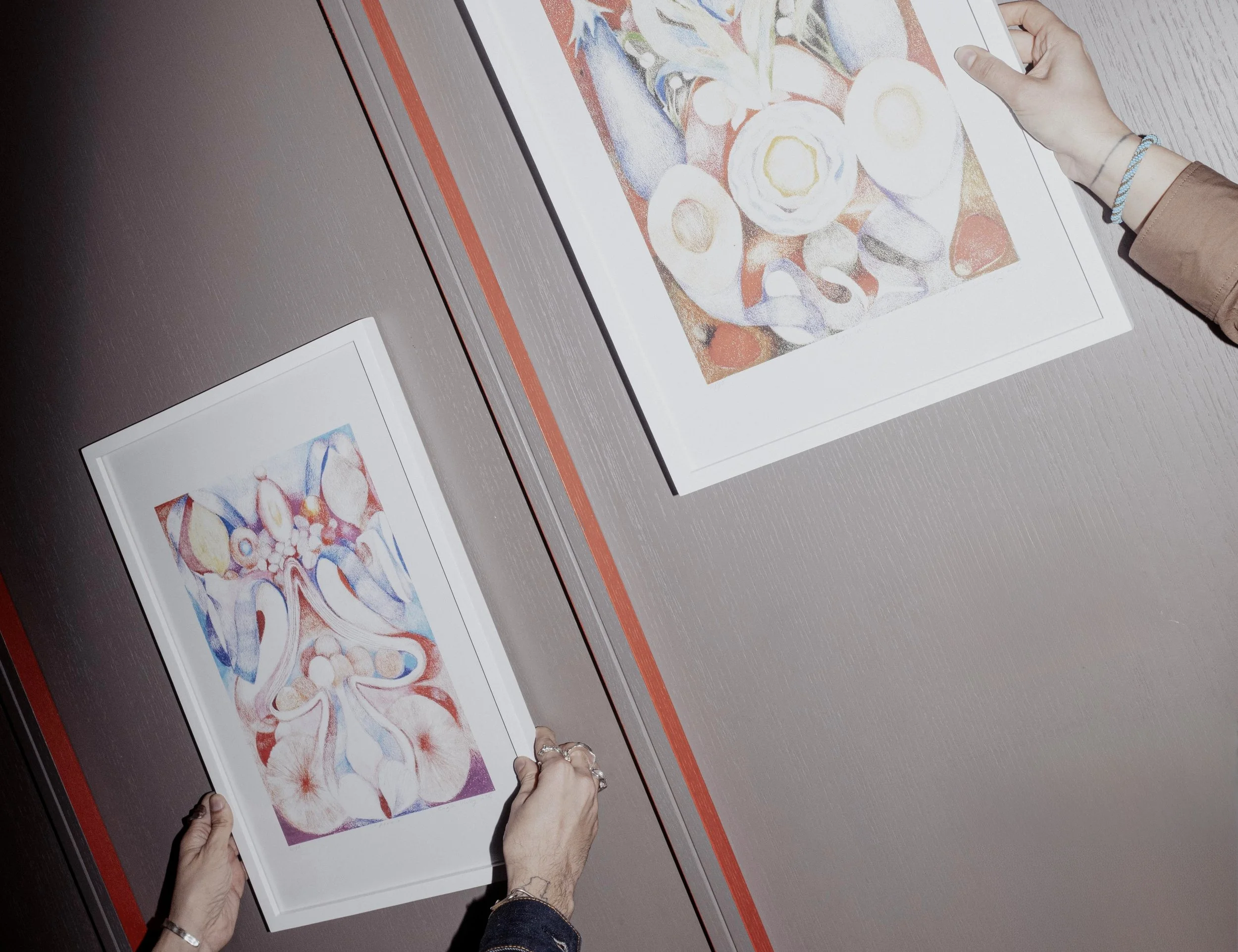
The photographs were taken by Emirkan Cörüt for border_less.
Overlooking Istanbul view, around a table: eggplant, pomelo, color/smell/taste, enjoy your problems
Conversation with Çağla Ulusoy, Ecem Yüksel, Vardal Caniş & Gülin Özalp
border_less / Huo Rf
6 minutes read, scroll down for text in Turkish
Since 2021, we have been organizing the border_less EDITIONS series, sharing new productions throughout the year via online platforms, and concluding each cycle with pop-up physical exhibitions in collaboration with galleries.
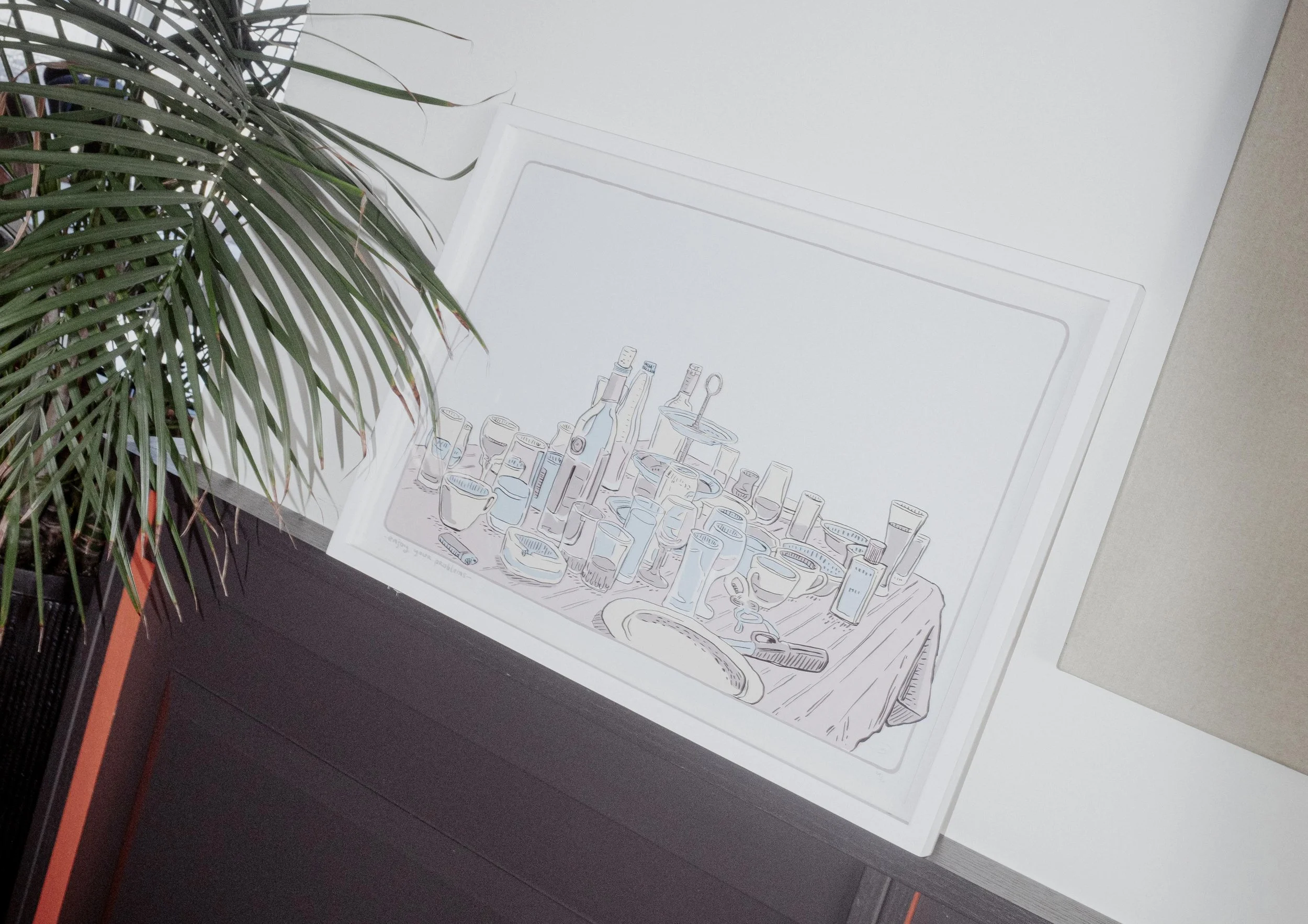
This summer, a selection of works produced for the series by Çağla Ulusoy, Ecem Yüksel, and Vardal Caniş is being hosted by vibrant, living venues such as Okra, Firuze Meyhane, and Monkey İstanbul.
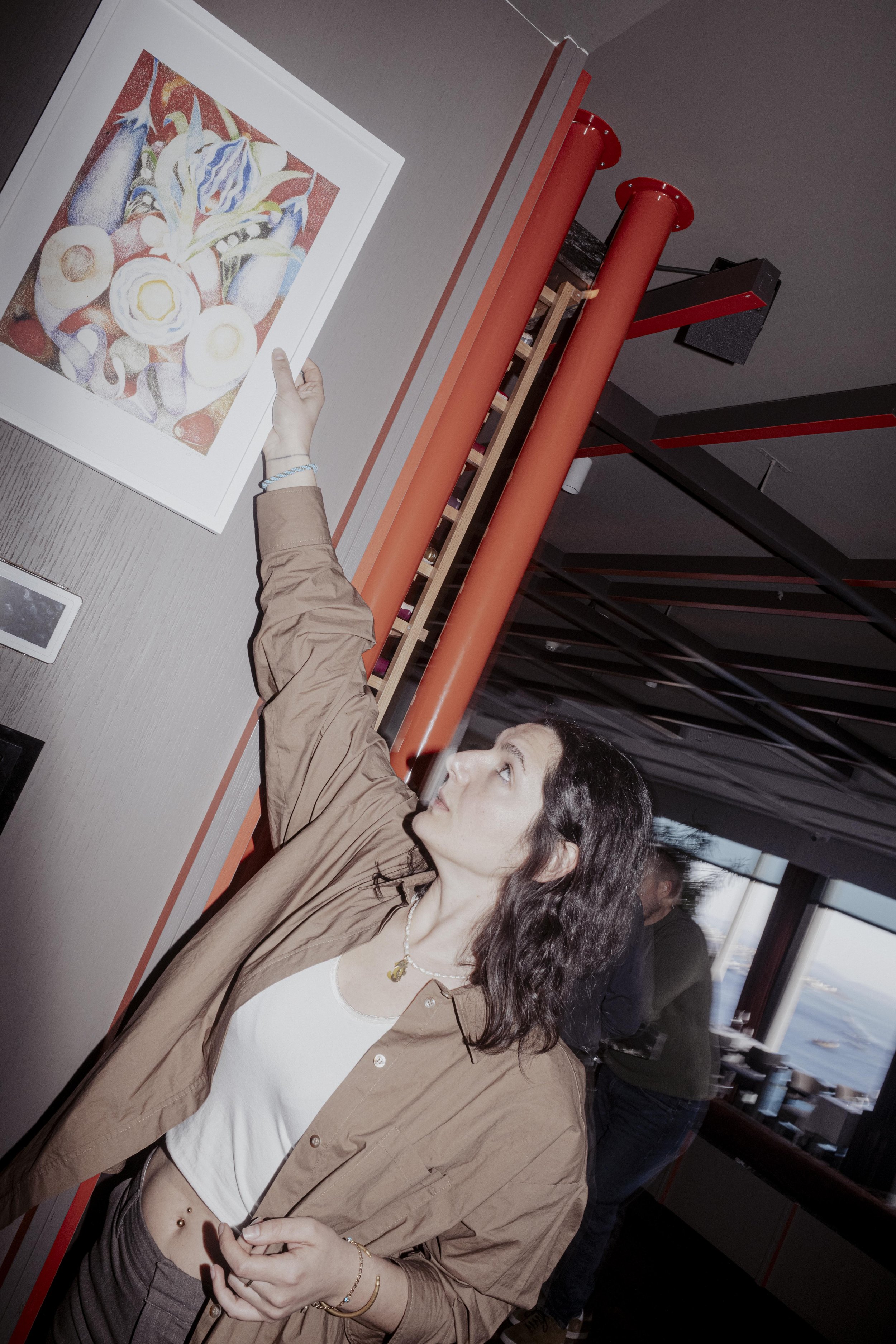
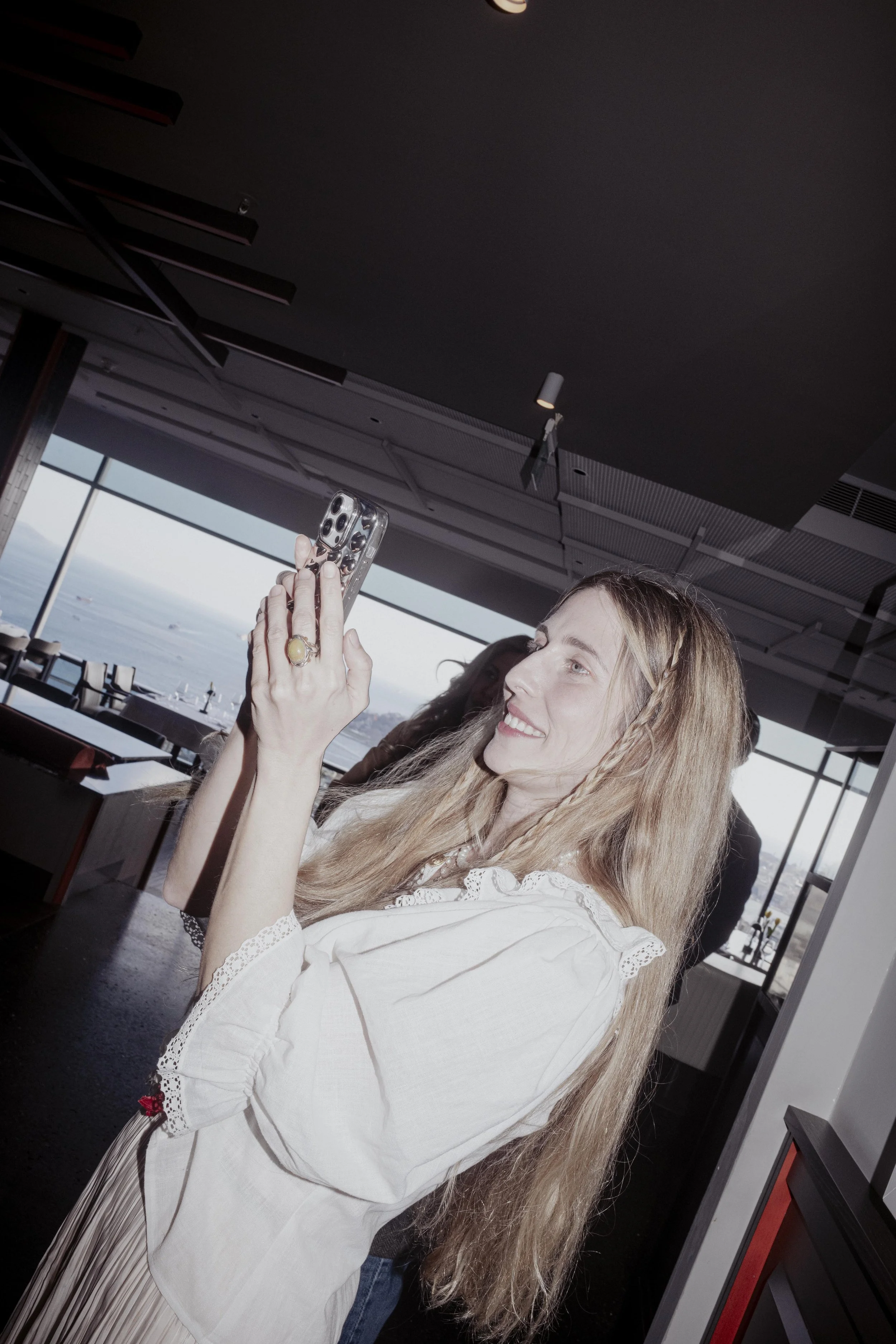
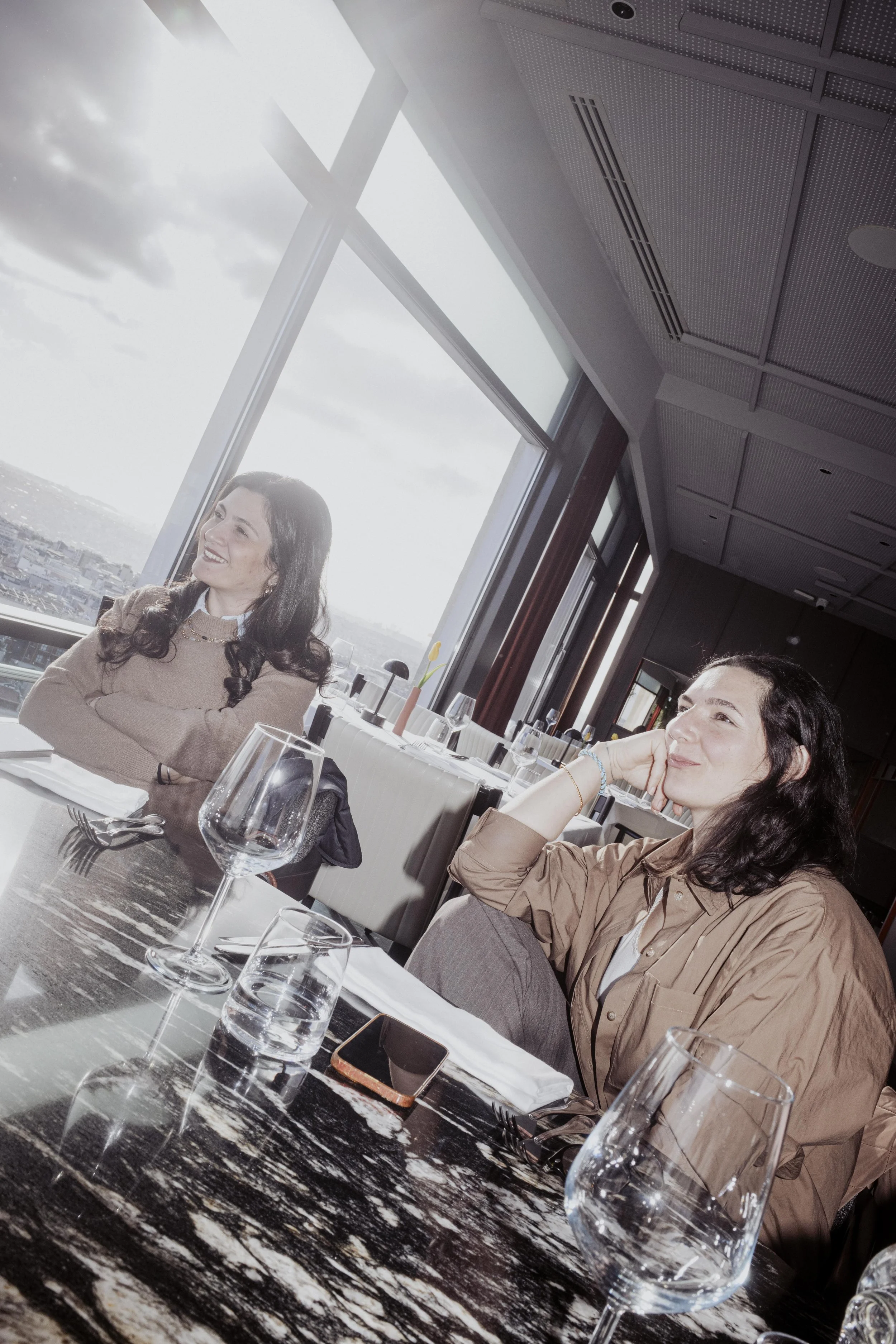
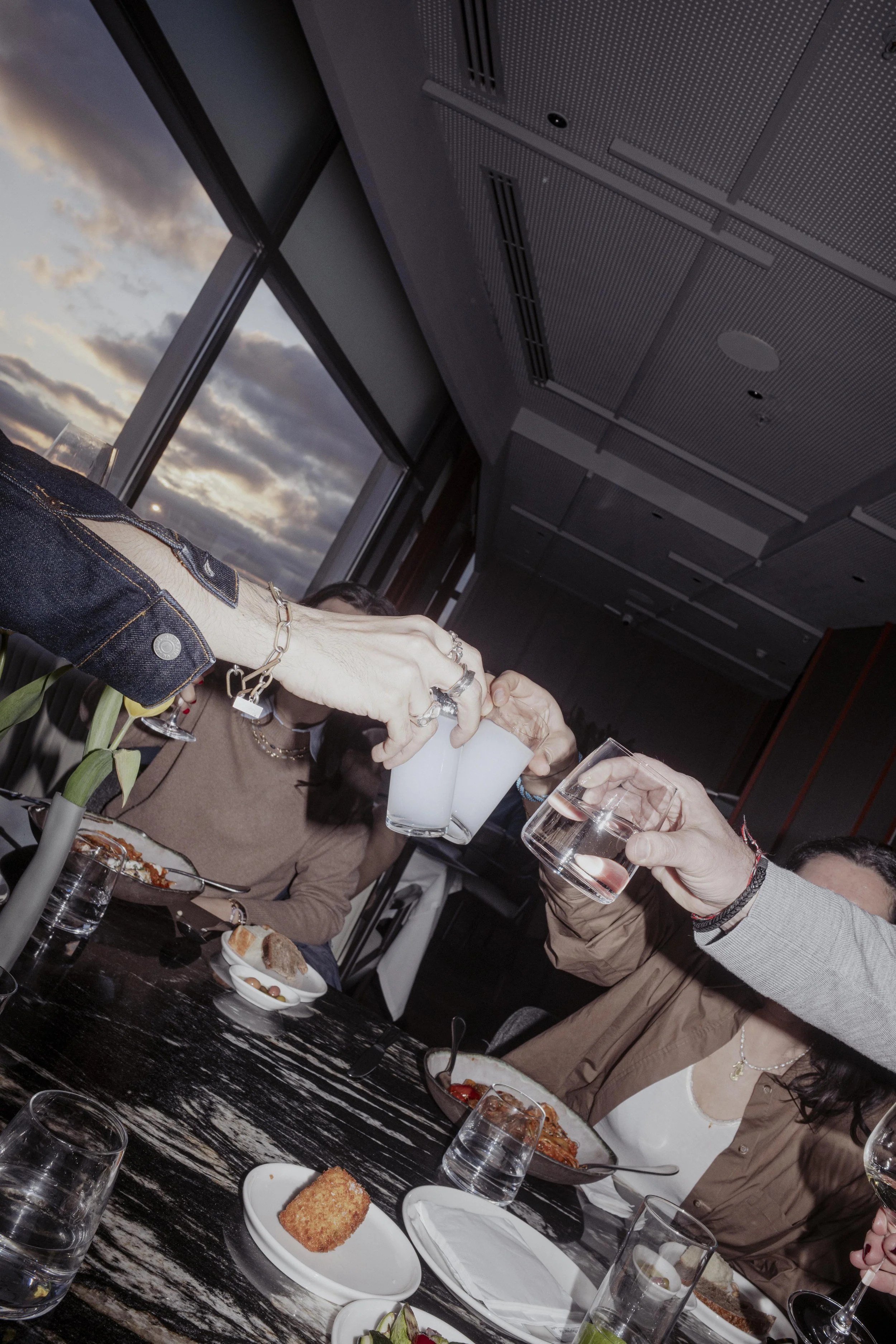
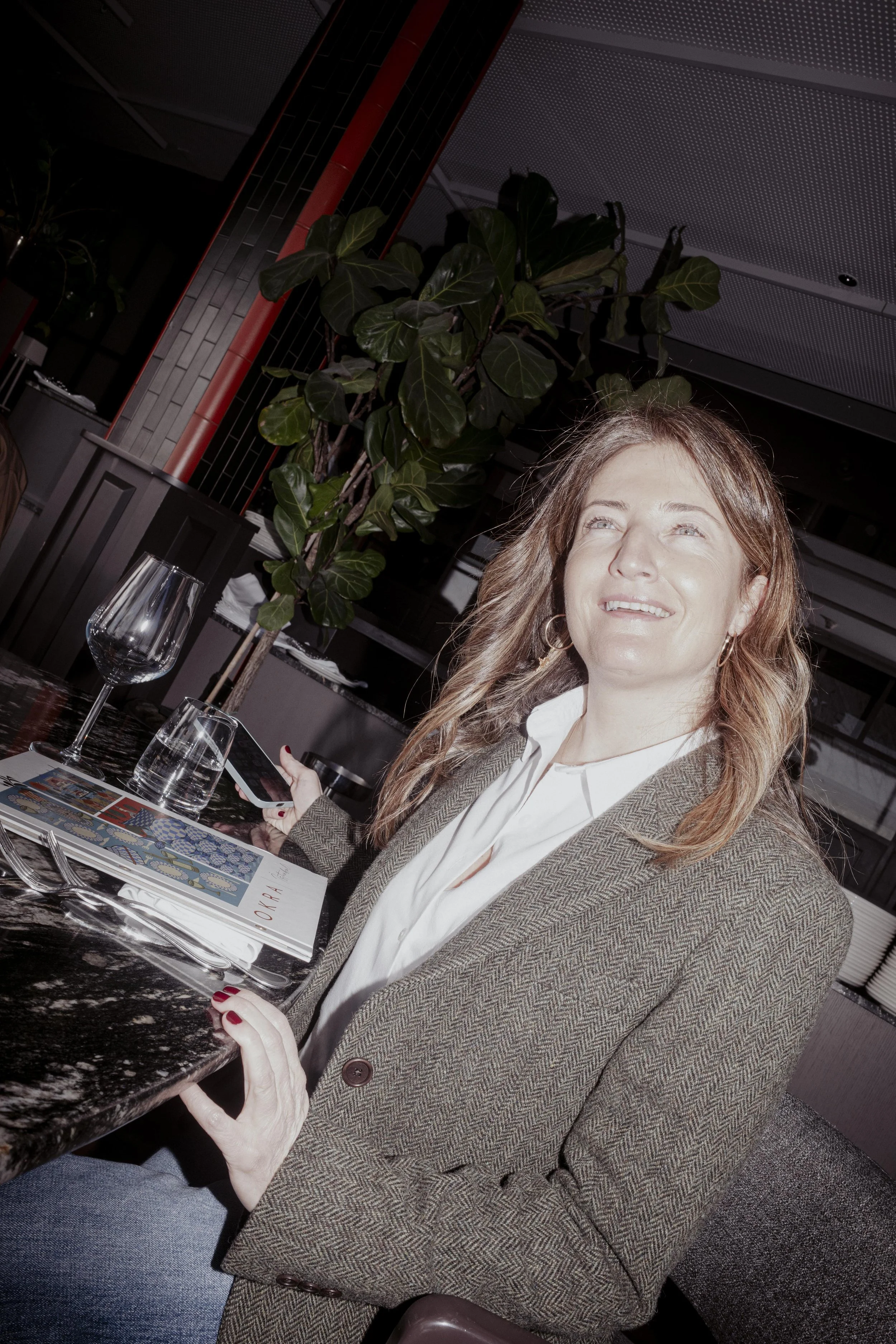
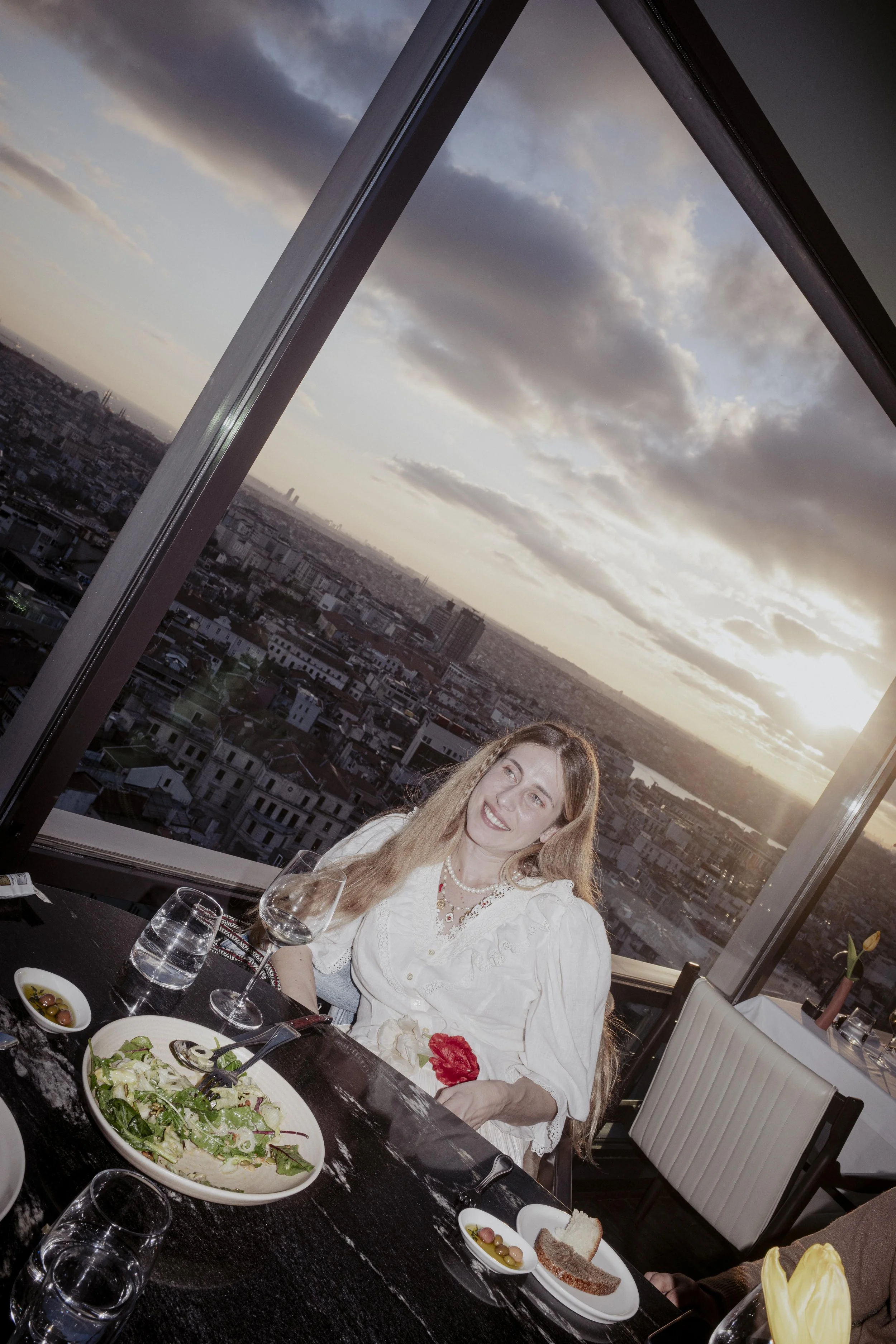
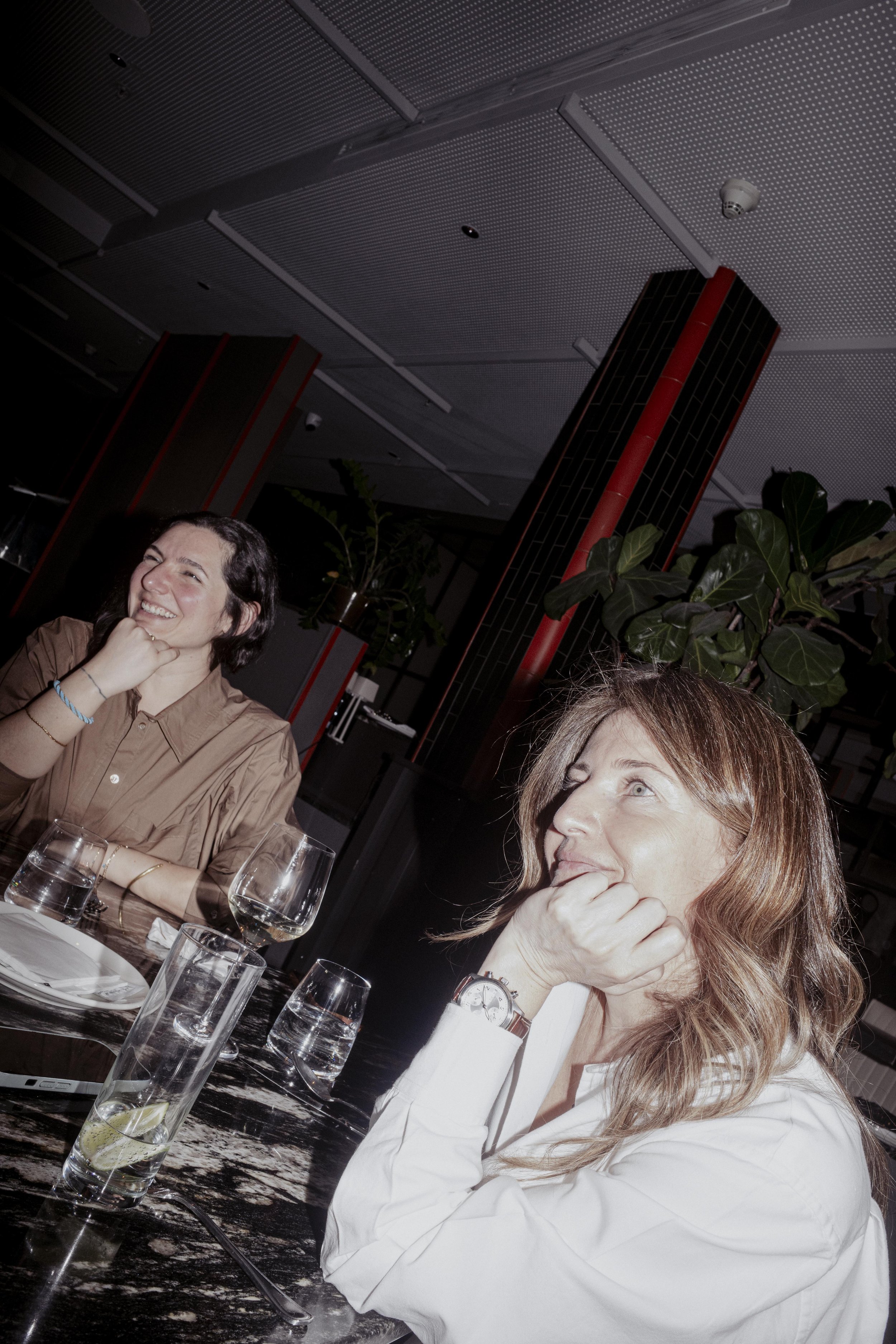
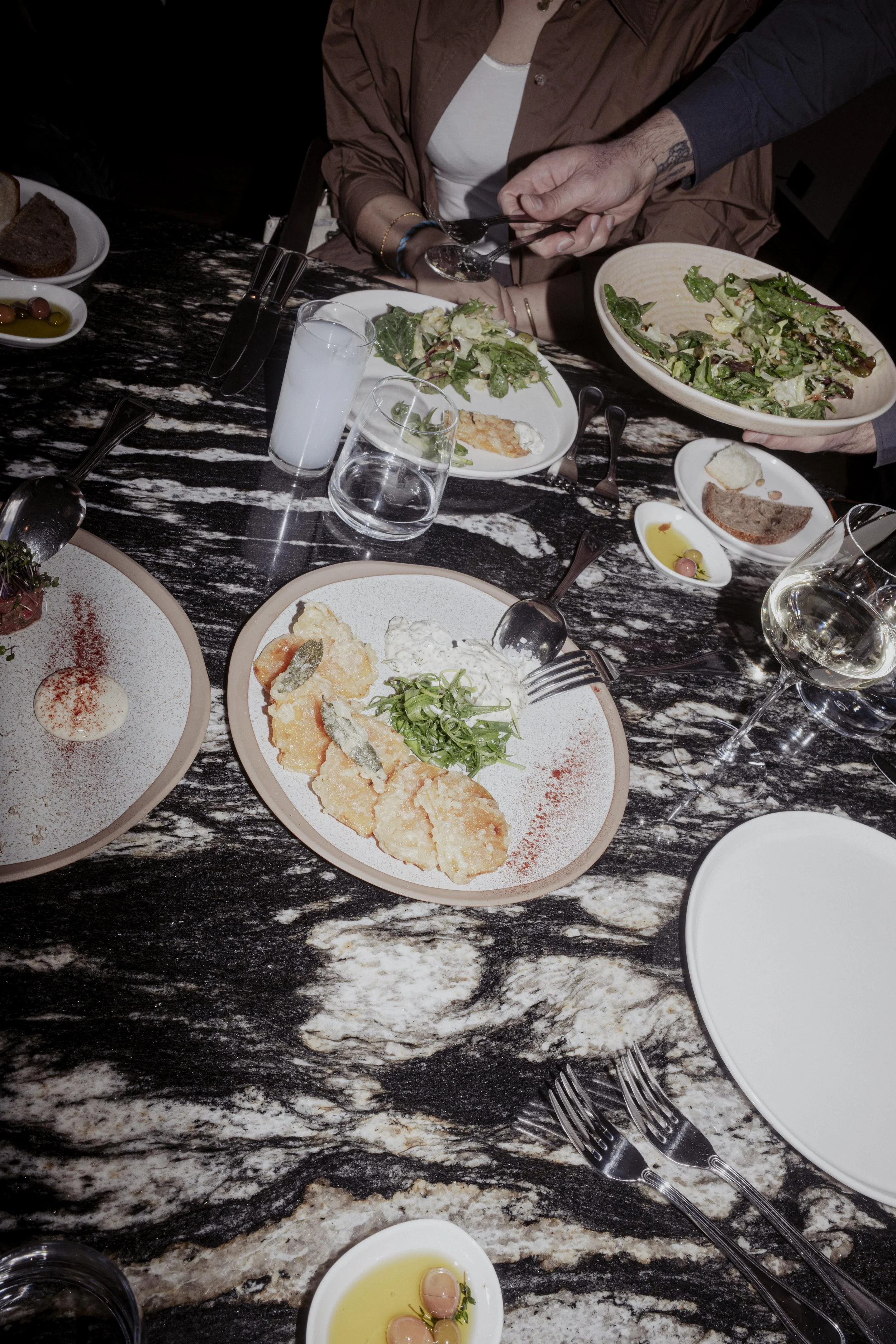
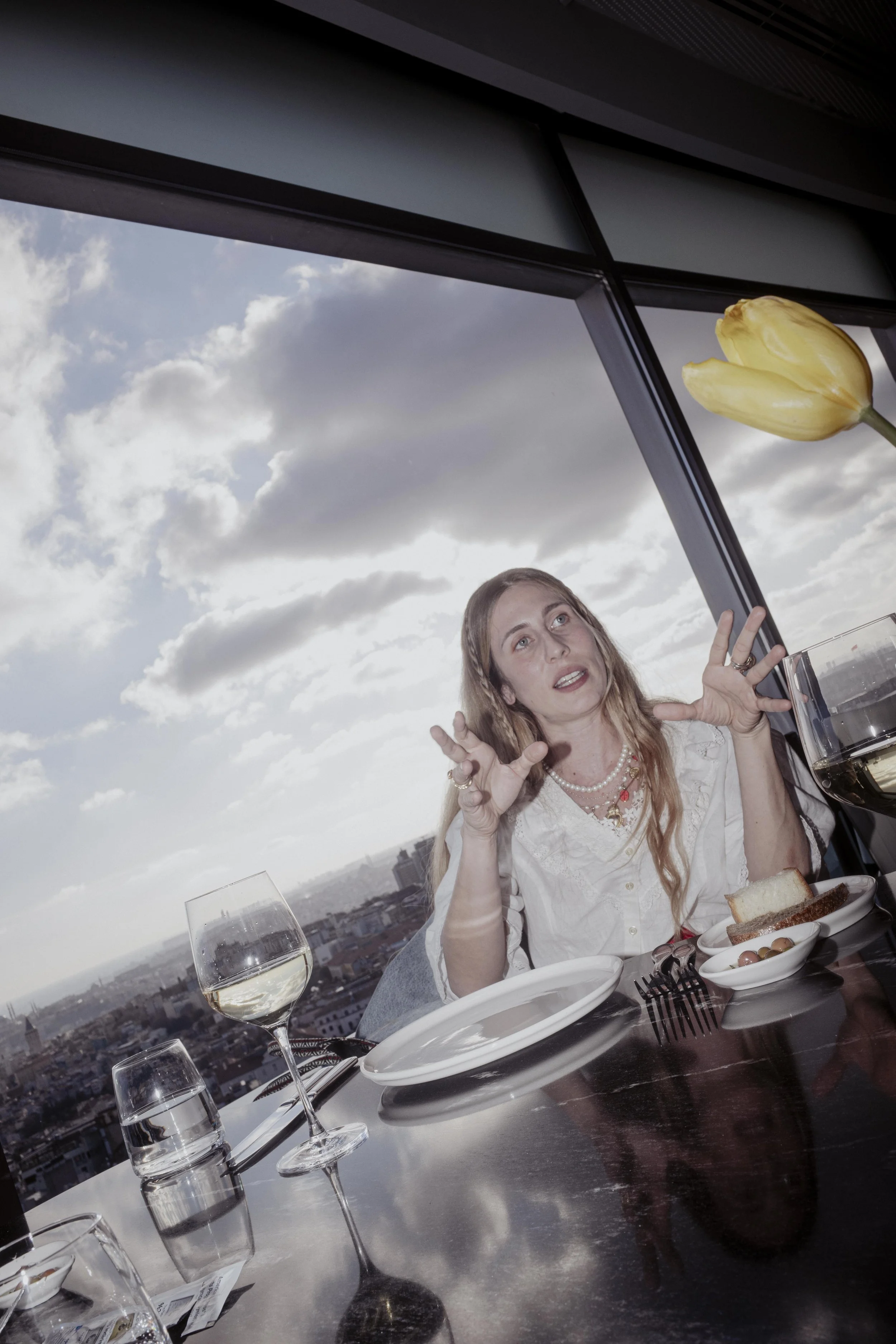
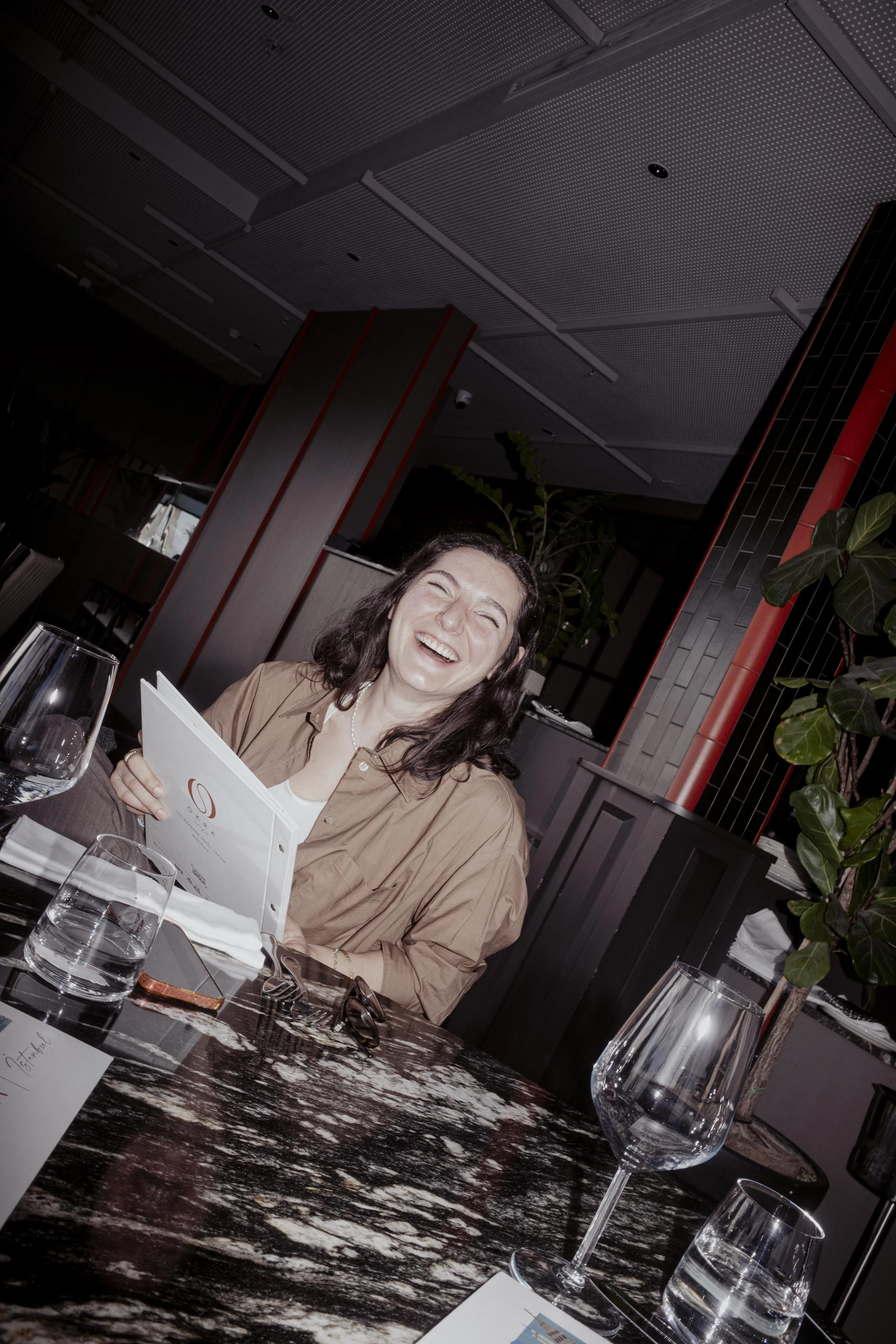
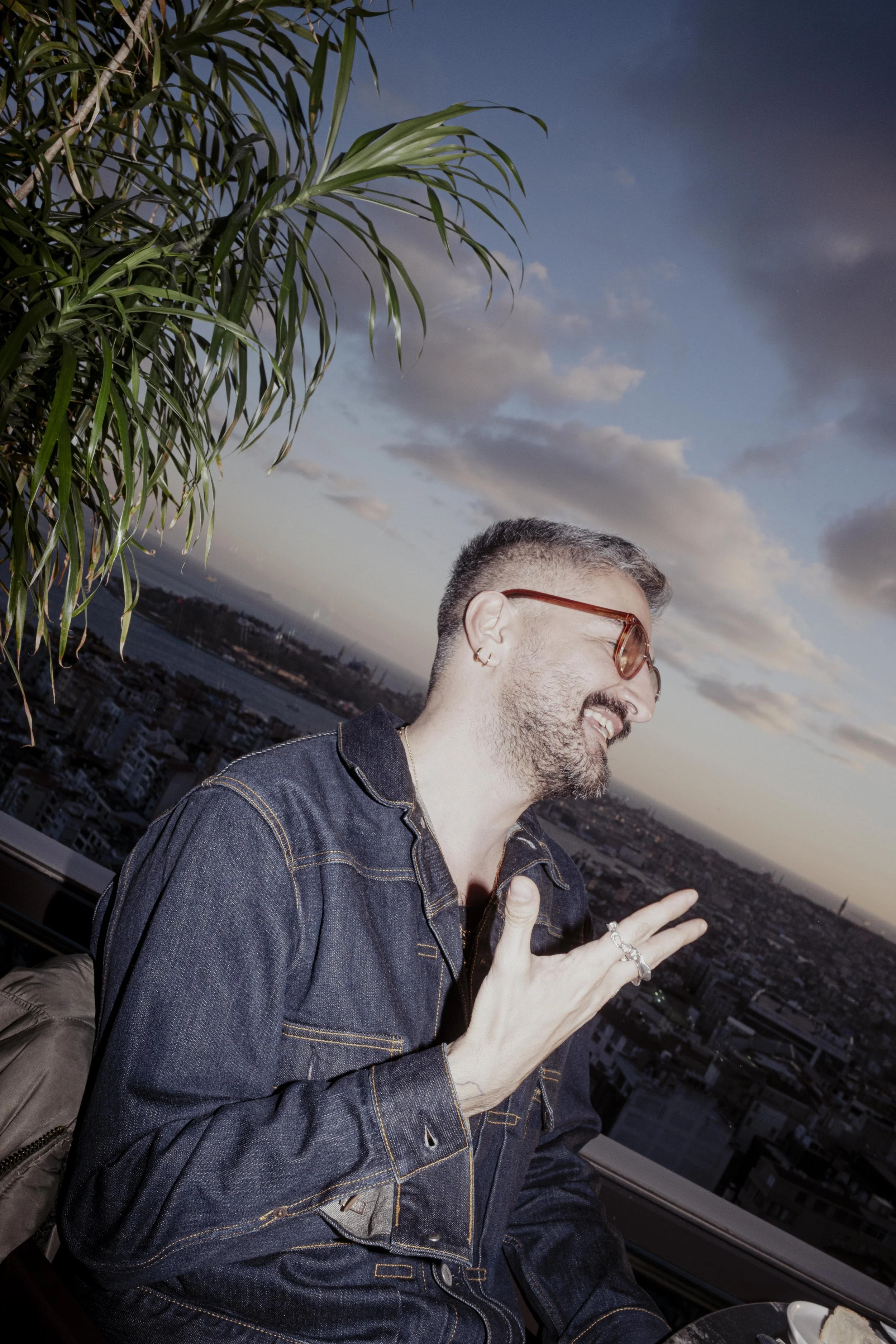
We came together at Okra to share the series, place the works within the space, and talk about Istanbul and life. We wanted to bring together a few notes from our conversation here.
How are you? What are you working on nowadays?
Çağla Ulusoy: I’m currently in Hong Kong, excited for the opening of my solo booth at Art Basel. I’ll be exploring the region for a while to gather inspiration. When I come back to Istanbul in June, I’ll start preparing for the group exhibition I’ll be participating in at Dirimart London.
Ecem Yüksel: Nowadays I’m spending a lot of time in my studio and reading quite a bit. Last month, I revisited an old piece of mine for the Vanilla,Grass, Almond exhibition. It was quite interesting to go back a few years and see how I used to think back then. I’ll be making a new screenprint in April; I’m currently preparing for it.
Vardal Caniş: Dear Ümit, I’m currently in Ankara, printing lithographs. Lithography is the polar opposite of my impatience and haphazardness—a printing technique that forces me to conform to its demands. I’m trying to stretch those demands as much as I can and find comfort within them. I’ve fallen in love with Ankara. Here, you really come to understand just how fast-paced Istanbul is. Seeing how much a city can shape a person’s character has deeply moved me. Ankara is a city of old friendships. Almost everyone has a passion they pursue outside of their professions. While in Istanbul, people do what they must simply to get by; in Ankara, they find ways to fill their time. Istanbul is more calculated, more practical—like turning on the kettle and going to the bathroom while the water is boiling. Ankara’s tranquility, which might be seen as tedious or even a cause for complaint, also acts as a brake on the growth of one’s petty ambitions. These are the things I’ve been thinking about during my time here.
Gülin Özalp: I’m doing well. Summer is the most exciting time of the year for me. As the rhythm of the city shifts and our open-air spaces come back to life, the energy of our venues is completely transformed. Being more active in both my work and social life, along with new plans and new travel routes, makes me very happy.
You’ve all made works for the border_less EDITIONS series. The nature of these editioned, varied works enables them to reach a wider audience and more spaces. Does this resonate with you? Is there a tension between the value of a unique piece and that of an editioned work?
Çağla Ulusoy: This was my first work with variations—it’s as if the work has gained a life of its own and is multiplying! It’s seeping into and blending with various homes and spaces autonomously… There’s definitely no difference in value to me, but I’m very curious about where they are, what they’re doing, and how they’ll resurface in my life in the future :).
Ecem Yüksel: For me, making editioned and varied works isn’t merely a matter of replication; rather, it concerns the capacity of an idea to be recontextualized in different settings. The fact that a piece has editions does not negate its uniqueness. That’s why I don’t see a conflict of value between a unique work and an editioned work; I view them more as two distinct modes of production serving different functions.
Vardal Caniş: I love editioned works; I prefer them over unique pieces, and I’m even pushing to increase the number of editions with my pieces. Lately, it became clear to me that I want my works to be accessible. I wish my drawings had the appeal of a catchy song that people can’t stop singing. That’s probably part of the reason why my paintings are so closely tied to my writing.
The pieces you’ve made for the series will be installed at Okra, Firuze Meyhane, and Monkey İstanbul—should we call them living spaces, convivial spaces, or shared spaces for various purposes…? How do you think exhibiting your work in social spaces affects the relationship it establishes with the audience?
Çağla Ulusoy: I think it’s wonderful—and a rare treat—that these venues are making room for contemporary emerging artists. We’re not used to seeing limited-edition, accessible art in prestigious venues. I believe this will be an exciting encounter that has the potential to transform the audience’s relationship with art.
Ecem Yüksel: By its very nature, an editioned work offers the opportunity to reach a wider audience and expand into different venues; this increases the likelihood of engaging with more people. When installed in public spaces, this effect is amplified, and the work establishes a more natural connection with the audience. At the same time, it creates an opportunity to engage not only with those who already follow art but also with people who are not accustomed to such encounters.
Vardal Caniş: I like these spaces that accommodate sharing because they make things more accessible. I want my works to spread far and wide with their multiplicity, and go through experiences. I don’t want the best for them, rather I want them to lead a turbulent life.
The works produced by Vardal Caniş, Ecem Yüksel, and Çağla Ulusoy for the series will be installed in venues such as Okra, Firuze Meyhane, and Monkey İstanbul—should we call them living spaces, spaces of celebration, or perhaps spaces of sharing shaped by different motivations? How do you think exhibiting works in social venues affects the relationship they establish with the audience?
Gülin Özalp: These venues are, in fact, social spaces where people come together with a range of motivations—spaces of celebration, of sharing, and of gathering for different reasons. In this sense, art exists here in a more vibrant and active way.
I believe it is very valuable for art to be present in such social settings. People don’t come here specifically to see art, yet they encounter it nonetheless. This encounter becomes more natural, more instinctive.
It allows the work to become part of its surroundings—the food, the music, the view. I think this strengthens the impact of the artwork and deepens the spirit of the space, making it more memorable.
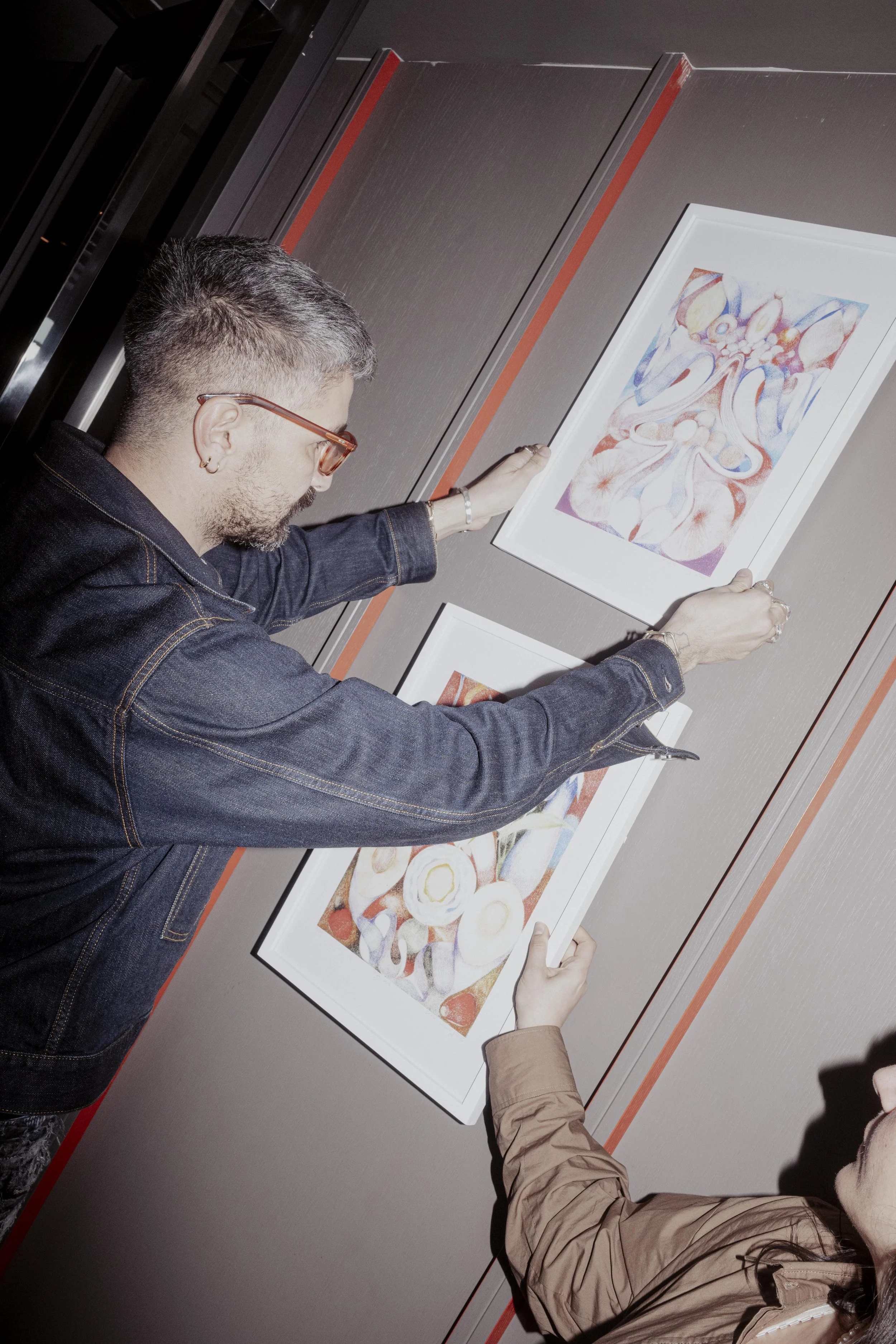
Fotoğraflar, Emirkan Cörüt tarafından border_less için çekilmiştir.
İstanbul manzarasında, bir sofranın etrafında: patlıcan, pomelo, renk/koku/tat, enjoy your problems
Çağla Ulusoy, Ecem Yüksel, Vardal Caniş & Gülin Özalp ile sohbet
border_less / Huo Rf
6 dakika okuma süresinde
2021 yılından bu yana organize ettiğimiz border_less EDITIONS serisinin yeni üretimlerini yıl boyunca çevrimiçi mecralar aracılığıyla paylaşıyor, yıl sonunda ise galerilerle iş birliği içinde pop-up fiziksel sergiler gerçekleştiriyoruz.
Bu yaz, Çağla Ulusoy, Ecem Yüksel ve Vardal Caniş’in seri için ürettikleri işlerden oluşan bir seçkiye Okra, Firuze Meyhane ve Monkey İstanbul gibi yaşayan mekânlar ev sahipliği yapıyor.
Seriyi paylaşmak, işleri mekâna yerleştirmek ve İstanbul’u, hayatı konuşmak için Okra’da bir araya geldik. Sohbetimizden bazı notları burada paylaşmak istedik.
Nasılsınız? Neyle meşgulsünüz şu an?
Çağla Ulusoy: Şu anda Honk Kong’dayım Art Basel’de kişisel sergimi açma heyecanındayım. Bir süre buralarda gezip ilham toplayacağım. Döndüğümde Haziran’da, Londra Dirimart’da katılacağım karma serginin hazırlıklarına başlayacağım.
Ecem Yüksel: Bu aralar sıkça atölyemde vakit geçiriyor ve bolca okuyorum. Geçen ay Vanilla, Grass, Almond sergisi için çok eski bir üretimimle yeniden haşır neşir oldum. Birkaç sene öncesine dönüp o zamanki düşünme biçimimi görmek oldukça ilginçti. Nisan ayında yeni bir baskı üreteceğim; bunun için hazırlıklar yapıyorum.
Vardal Caniş: Sevgili Ümit, Ankaradayım, litografi basıyorum. Litografi benim sabırsızlığım, sallapatiliğime taban tabana zıt bir baskı tekniği ve beni kendisine uymaya zorluyor. Ben de o tekniğin dayatmalarını elimden geldiğince esnetmeye içinde rahat etmeye çalışıyorum. Ankaraya bayıldım. İstanbul’un ne kadar hızlı olduğunu burada iyiden iyiye anlıyorsun. Bir şehrin insanın huyu suyuna bu kadar etki ettiğini görmek de beni çok etkiledi. Ankara eski dostluklar şehri. Hemen herkesin mesleği dışında derinleştiği bir ilgi alanı var. İstanbulda hayatta kalmak için yapılanların karşısına; Ankara, zamanını dolduracak işler bulmuş olmayı koyuyor. İstanbul daha hesapçı, daha pratik zekalı, ketıla su koyup tuvalete gitmek gibi. Ankara’nın şikayetçi olunabilecek, sıkıcı bulunabilecek sakinliği insanın küçük hırslarının büyümesinin de stoperi oluyor. İşte bunları düşündüm buradaki süre boyunca.
Gülin Özalp: Ben iyiyim. Yaz benim için yılın en heyecan verici dönemi. Şehrin ritmi değişirken, açık alanlarımızın yeniden hayata geçmesiyle mekanlarımızın enerjisi tamamen dönüşüyor. Hem işimde hem de sosyal hayatımda artan hareketlilik, yeni planlar ve yeni seyahat rotaları beni çok mutlu ediyor.
border_less EDITIONS serisi için işler ürettiniz. Edisyonlu, varyasyonlu işlerin doğası daha fazla izleyiciye ve mekana ulaşması demek oluyor. Bunun sizde bir karşılığı var mı? Biricik iş ile edisyonlu iş arasında bir değer çekişmesi var mı?
Çağla Ulusoy: Bu benim ilk varyasyonlu iş üretimim, sanki iş kendi iradesini kazanmış gibi çoğalıyor! Benden bağımsız bir şekilde çeşitli evlere mekanlara sızıyor, karışıyor… Değer farkı kesinlikle yok ama neredeler ne yapıyorlar, ileride karşıma nasıl çıkacaklar, çok merak ediyorum:)
Ecem Yüksel: Edisyonlu ve varyasyonlu üretim benim için yalnızca çoğaltma meselesi değil; aksine, bir fikrin farklı bağlamlarda yeniden kurulabilme kapasitesiyle ilgili. Bir işin edisyonlu olması, onun tekilliğini ortadan kaldırmıyor. Bu yüzden biricik iş ile edisyonlu iş arasında bir değer çekişmesi kurmuyorum; daha çok farklı işlevlere sahip iki üretim dili olarak düşünüyorum.
Vardal Caniş: Edisyonlu iş seviyorum ben, biricik işlere nazaran tercih ediyor, edisyon sayısını da arttırmayı zorlamak istiyorum hatta. Yaptıklarımın ulaşabilir olmasını istediğimi bugünlerde daha iyi anladım. Keşke herkesin ağzına takılıveren bir şarkının imkanlarına sahip olsaydı çizdiklerim. Herhalde biraz da bu yüzden yazı ile sıkı sıkıya bağları var resimlerimin.
Seri için ürettiğiniz işleriniz Okra, Firuze Meyhane ve Monkey İstanbul mekanlarına yerleştirilecek, yaşam alanları mı diyelim, kutlama alanları mı, farklı sebeplerden paylaşım alanları mı…? İşlerinizin sosyal mekanlarda sergilenmesi izleyiciyle kurduğu ilişkiyi sizce nasıl etkiliyor?
Çağla Ulusoy: Bence bu mekanların çağdaş ve genç sanatçılara yer açması çok güzel ve nadir karşılaşılan bir sürpriz. Özellikle edisyonlu, erişebilinir sanat görmeye alışık değiliz prestijli mekanlarda. İzleyicinin sanat ile olan ilişkisini dönüştürebilecek, heyecanlı bir buluşma olacağını düşünüyorum.
Ecem Yüksel: Edisyonlu iş, yapısı gereği daha fazla izleyiciye ulaşma ve farklı mekânlara yayılma imkânı taşıyor; bu da daha çok insanla karşılaşma olasılığını artırıyor. Sosyal mekânlara yerleştiğinde bu durum daha da güçleniyor ve iş, izleyiciyle daha doğal bir temas kuruyor. Aynı zamanda, sanatı zaten takip eden izleyicinin yanı sıra, bu tür karşılaşmalara alışık olmayan kişilerle de bir karşılaşma imkânı yaratıyor.
Vardal Caniş: Bu mekanlar paylaşım ve yaşam alanları olarak ulaşılabilirliği arttırması bakımından bana iyi geliyor. Resimlerimin çokluğu ile yayılmasını, başına bi işler gelmesini isterim. Resimlerim için en iyisini istemiyorum, olaylı bir yaşam diliyorum.
Vardal Caniş, Ecem Yüksel ve Çağla Ulusoy’un seri için ürettikleri işleri Okra, Firuze Meyhane ve Monkey İstanbul mekanlarına yerleştirilecek, yaşam alanları mı diyelim, kutlama alanları mı, farklı sebeplerden paylaşım alanları mı…? İşlerin sosyal mekanlarda sergilenmesi izleyiciyle kurduğu ilişkiyi sizce nasıl etkiliyor?
Gülin Özalp: Bu mekanlar aslında hem kutlama hem paylaşım hem de insanların farklı duygularla bir araya geldiği sosyal alanlar. Bu yüzden sanat burada daha canlı bir şekilde var oluyor.
Bence sanatın bu tür sosyal mekanlarda olması çok kıymetli. Çünkü insanlar buraya özellikle sanat görmek için gelmiyor, ama bir şekilde onunla karşılaşıyor. Bu karşılaşma da daha doğal, daha içgüdüsel oluyor.
Bu da eseri bulunduğu ortamın,yemeğin müziğin ve manzaranın bir parçası haline getiriyor. Bence bu, hem sanatın etkisini güçlendiriyor hem de mekanın ruhunu derinleştirip daha hatırlanır kılıyor.